
TAKEDOWN TACTICS (2024)
Genre: 2-Player Hidden Movement Boardgame
Role: Vision Keeper, Project Manager, Lead Game Designer, Lead Artist
Project Length: Semester Project
Team Size: 6 People
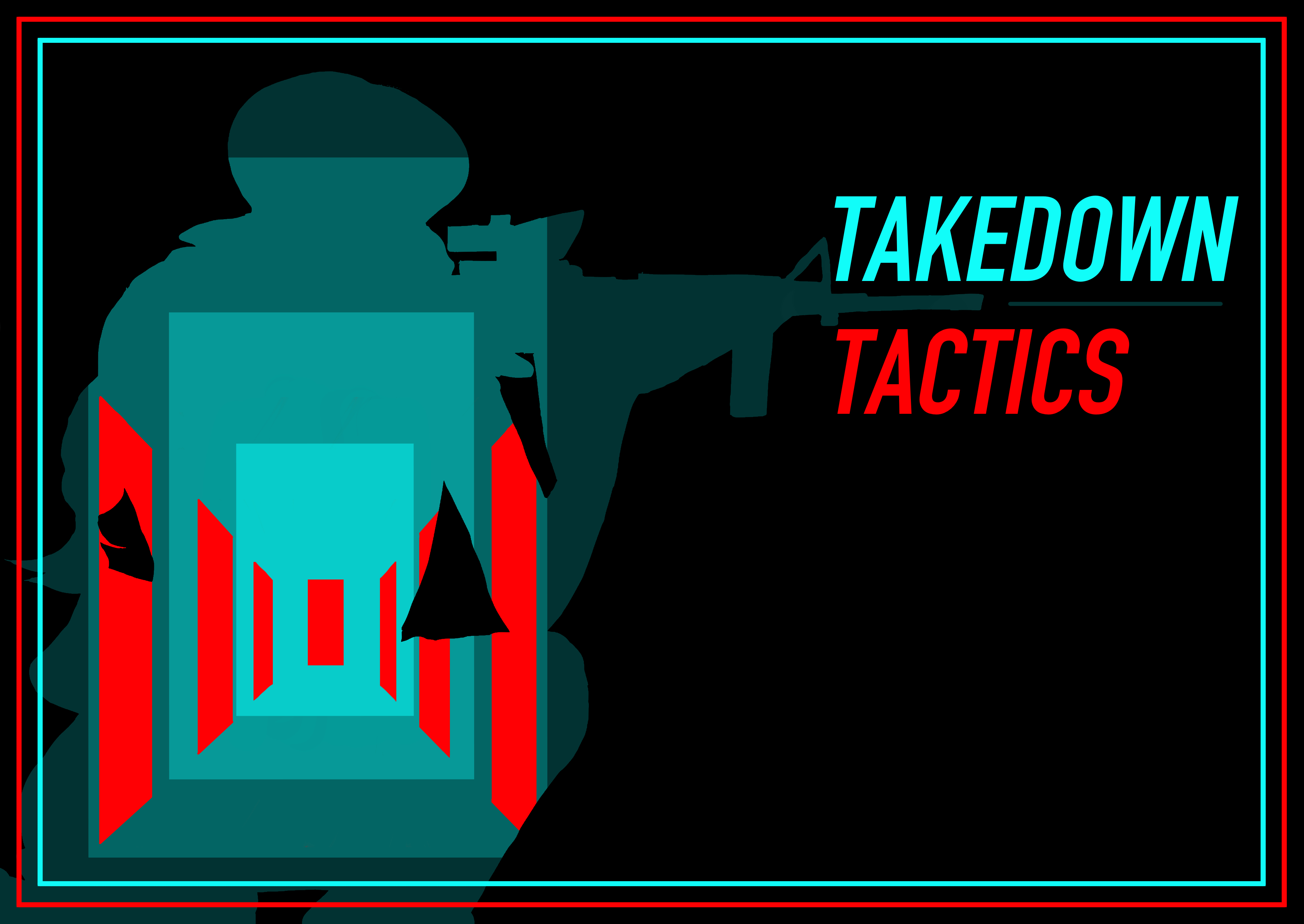
Takedown Tactics is a hidden movement strategy game for two players based on a popular tactical team shooter. The assignment was to pick a video game and translate its mechanics and game feeling into a board game. As the most experienced designer on my team I took over the leadership and supervision of the overall project. Takedown Tactics was nominated as the Best Semester Project in our degree for the Winter Semester 24/25. Its quality and intriguing gameplay stood out even among projects from higher semesters, and as a result we were granted the opportunity to pitch our game to board game publisher Ravensburger.
Vision Keeper & Lead Designer
As Vision Keeper and Game Designer, my main task was to make sure the game fulfilled the requirements of the assignment and every gameplay decision fit together to achieve that goal. To achieve this, I first analyzed the video game we took as inspiration, how it felt to play and why and how the mechanics worked together to achieve that goal. What stood out was that the core mechanic, shooting, wasn’t the main focus at all. Careful planning, outsmarting your opponent and making tactical decisions with unique character abilities was much more important, so the lead question became: „How can we make a board game where preparation and figuring out your opponents position before they do becomes the core experience?“
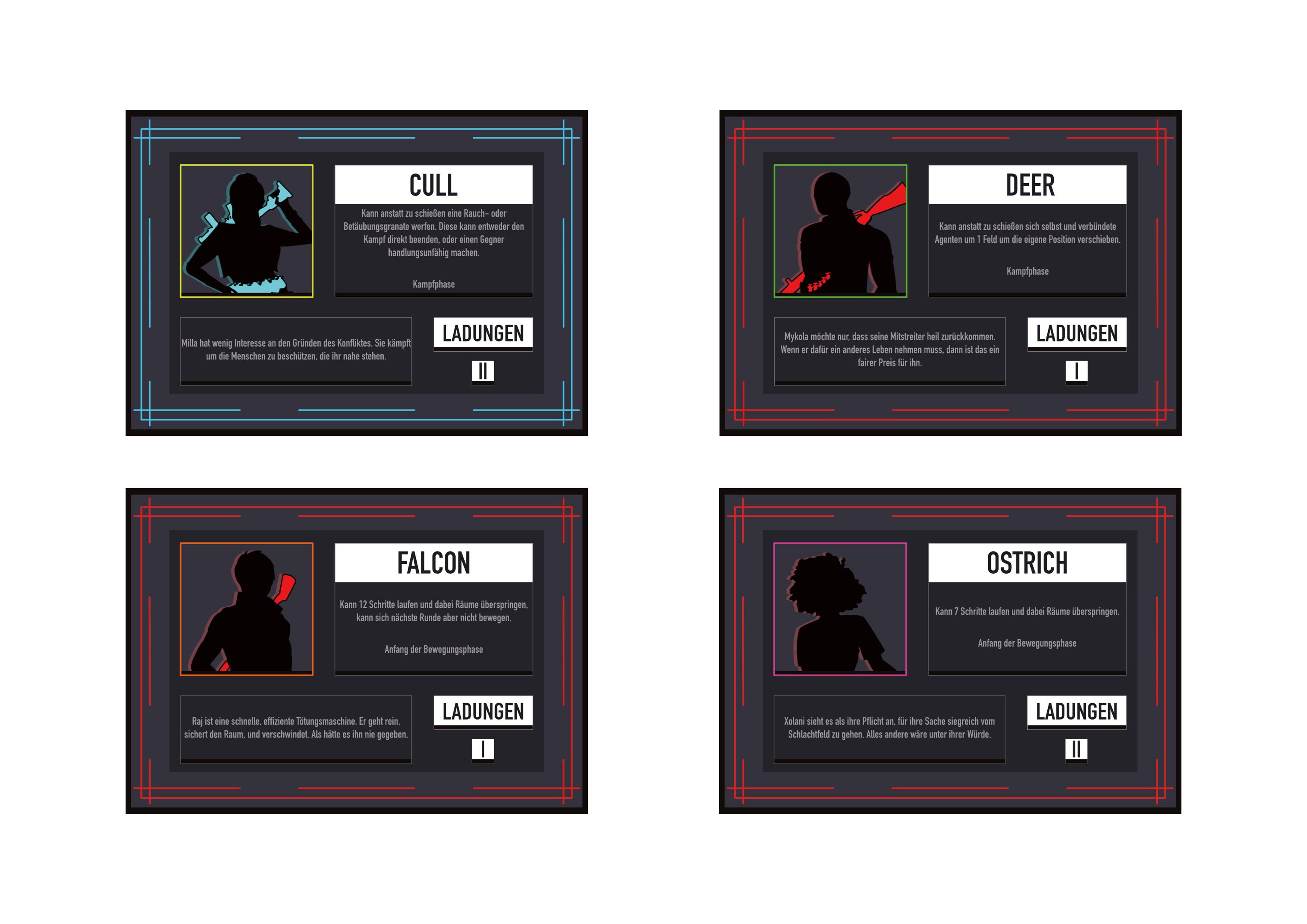
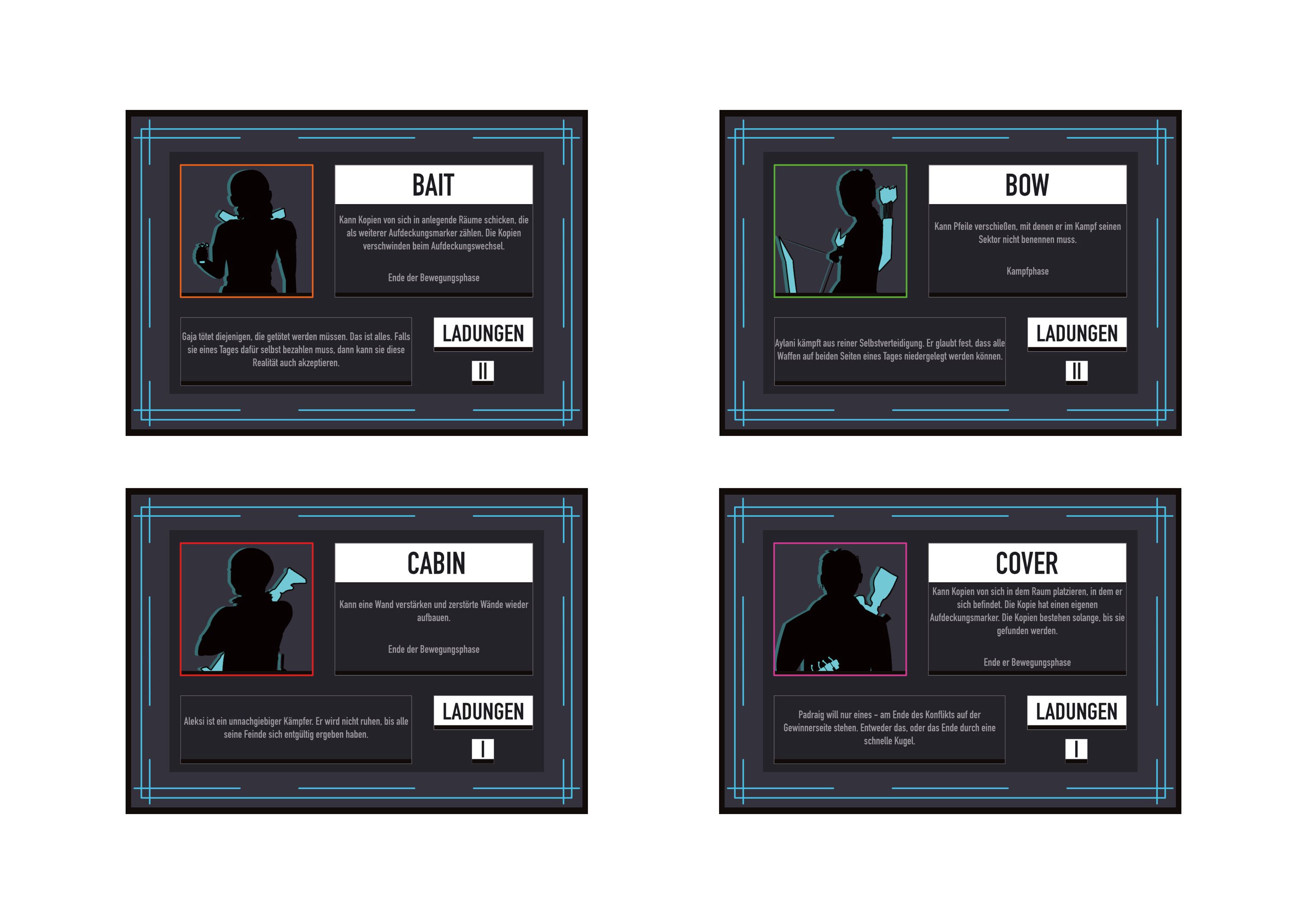
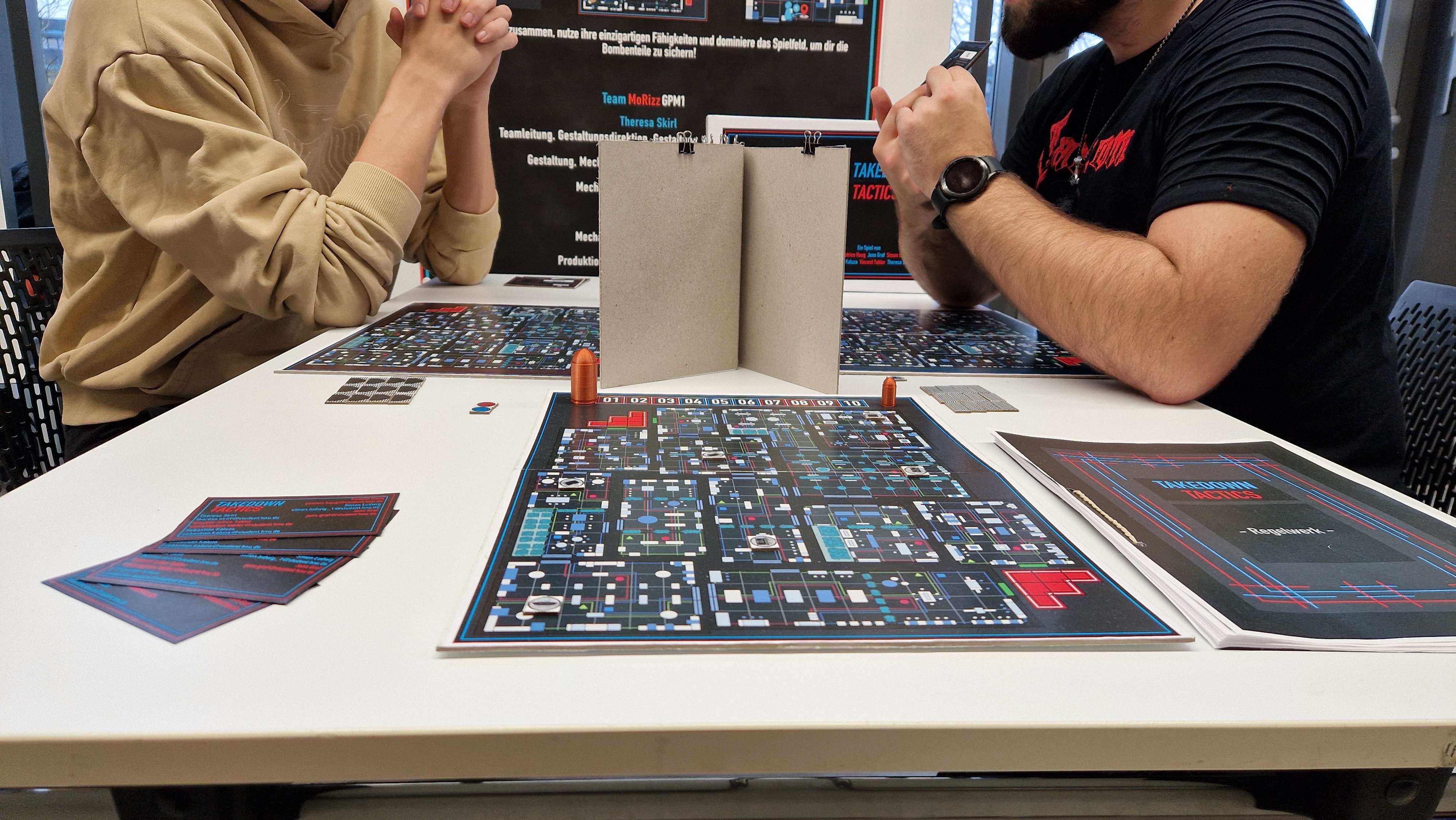
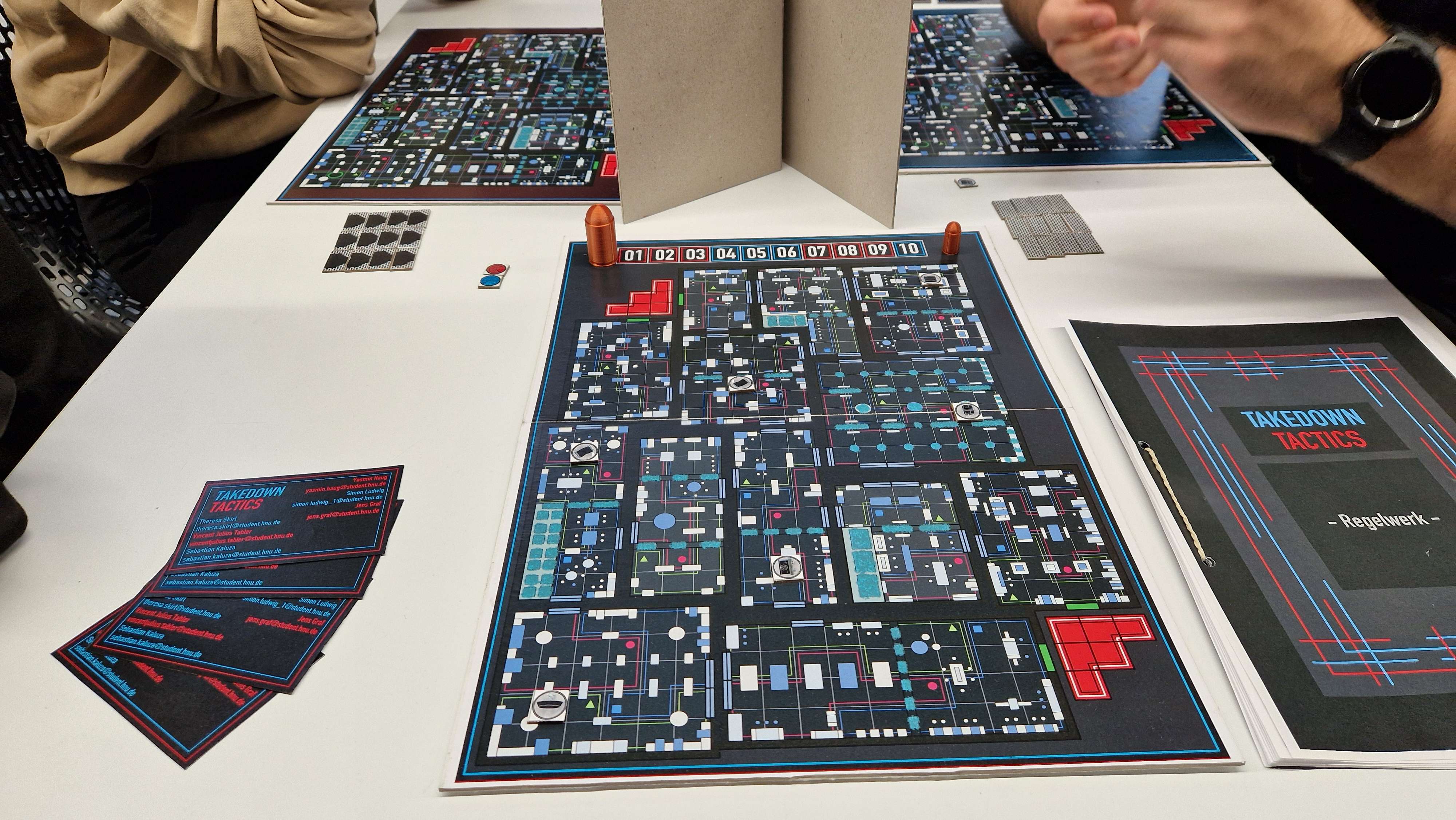
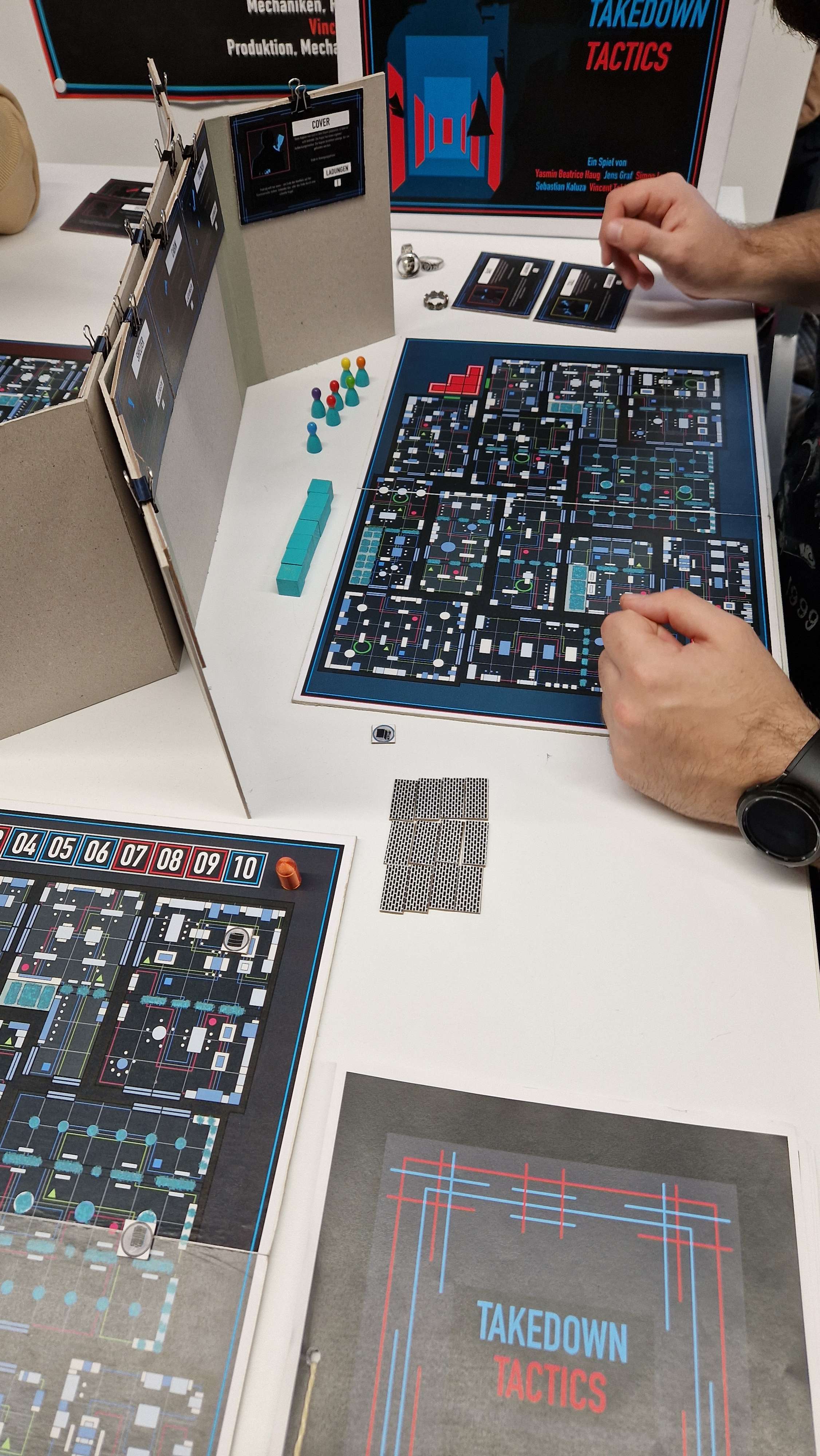
The result was a hidden movement game where each player can pick from a variety of different characters with unique abilities in order to best guess their opponent’s position. The game plays similar to the popular board game Battleships, with a grid-based structure and near instant destruction of enemy units in case of a hit. The different character abilities and two sides (attacker and defender) create many opportunities replayability. By adding new characters with new abilities, the game has the potential to be expanded even further.
To balance the game properly, I stripped the game down to its most basic mechanics, which was everything absolutely necessary for the hidden movement mechanic to work. Only when that part worked well and was fun, I carefully introduced each character’s ability, swapping them out, replacing and adjusting them to create the feeling I wanted. Some abilities turned out to be naturally stronger than others, so I raised their costs or adjusted their rules. Additionally, the size and layout of the map was especially important, as they drastically changed how the game felt or how often confrontations happened. To find the best solution, I playtested and observed other playtests countless times, making small and big adjustments until the size felt „just right“.
Lastly, I had the final decision when it came to gameplay decisions. Most of my team had never designed a game before, so their ideas were full of enthusiasm but not always practical. Sticking to the core question even if it meant cutting great ideas wasn’t always easy, but the result is a game with deep and organically fitting mechanics.
Project Manager & Producer
As Project Manager and Producer, I created the schedule for our project, lead our daily meetings and made sure we stayed on the right track to see our game vision fulfilled. I was also the team representative, discussed and explained our project with our clients (in this case our professors) and prepared and held weekly pitches and presentations to communicate and show our progress. I created and kept track of deadlines with project management tools such as GANTT and made sure to adjust properly for busier weeks, for example when exams in other classes were due.
Since each team member has different struggles and schedules, I adjusted accordingly to make sure every mark was set. I reassigned tasks when team members were absent or unable to work and stood firmly when team members underperformed or expectations weren’t met. Nevertheless, I always approached difficult conversations with empathy and understanding, trying to find solutions that worked for the team and each individual member.
For pitches, I prepared a proper pitch deck weekly and held a 5-10 minutes long presentation about our progress and goals. As a result, our team was picked among four others to participate in a special pitching session with Ravensburger, to get critical feedback from an industry professional.
As I was also the Lead Game Designer, I was in charge of picking and purchasing the right materials for our game. It was important to me that the materials weren’t too expensive, but still suited our project’s needs. The surface feel, materials and sizes of each individual game piece was especially important to me, as I wanted players to enjoy just holding the pieces in their hands. I collected the bills and split the price for each team member, making sure everyone paid the same amount.
Lead Artist
As the most experienced artist on my team, I created the game’s aesthetics and art direction. I wanted the art to feel mysterious with a hint of secrecy and decided for a dark look with two primary (opposing) colours, lots of silhouettes and classic fonts. The red and turquoise colour contrast was especially striking and is often used in PVP online games to mark enemies and allies. The silhouette look helped my less experienced artists too, as anatomical mistakes were much less visible.
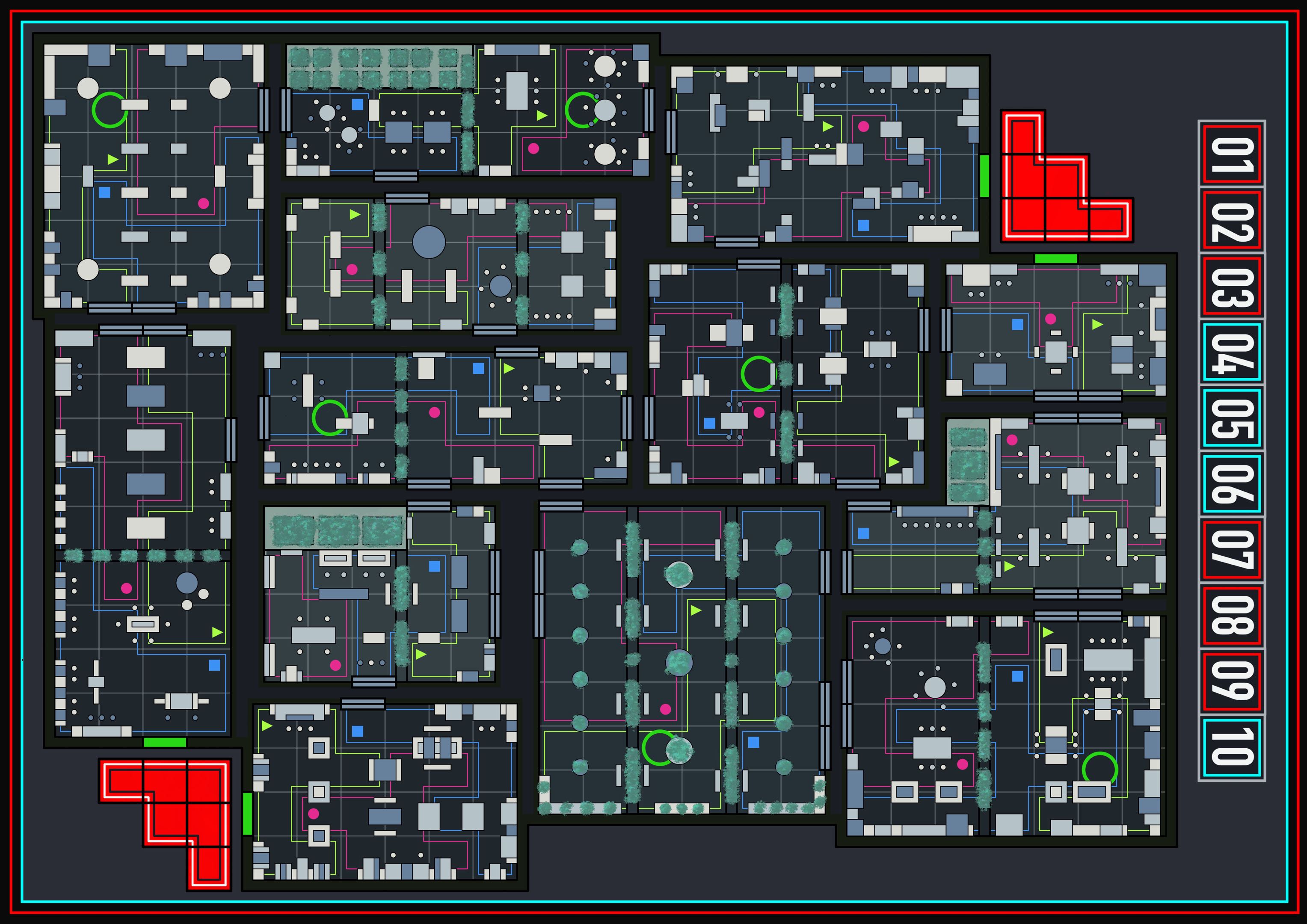
I created the boxr art, the character sheets in the shape of agent IDs and the map, which was the most difficult task. For the hidden movement mechanic to work, each player needed their own private map, a copy of the bigger, public map. Deciding the size of the maps was especially important. If the maps were too big, they would take up too much space on the table. If the maps were too small, moving the pieces could become finicky and annoying. I went through several variations in different sizes until I found the right size for each map. Additionally, the map needed to contain lots of information. Different rooms, positions, areas, obstacles, etc. For the areas (which are important to figure out the enemy’s position) I decided for different colours, later adding symbols (triangle, square and circle) for extra readability too. Lastly, the grid had to be adjusted several times, as the number of individual spaces caused confrontation to either become too frequent or too seldom. Lots of playtesting was required before the final map and position of individual tokens were decided on.
I also supervised and gave feedback to other artists on the team, helped and supervised with crafting the board and individual pieces.

CHAMPIONS OF THE COSMOS (2025)
Genre: Real-Time-Strategy (RTS)
Role: Vision Keeper, Game Designer, Project Manager
Project Length: Semester Project
Team Size: 6 People
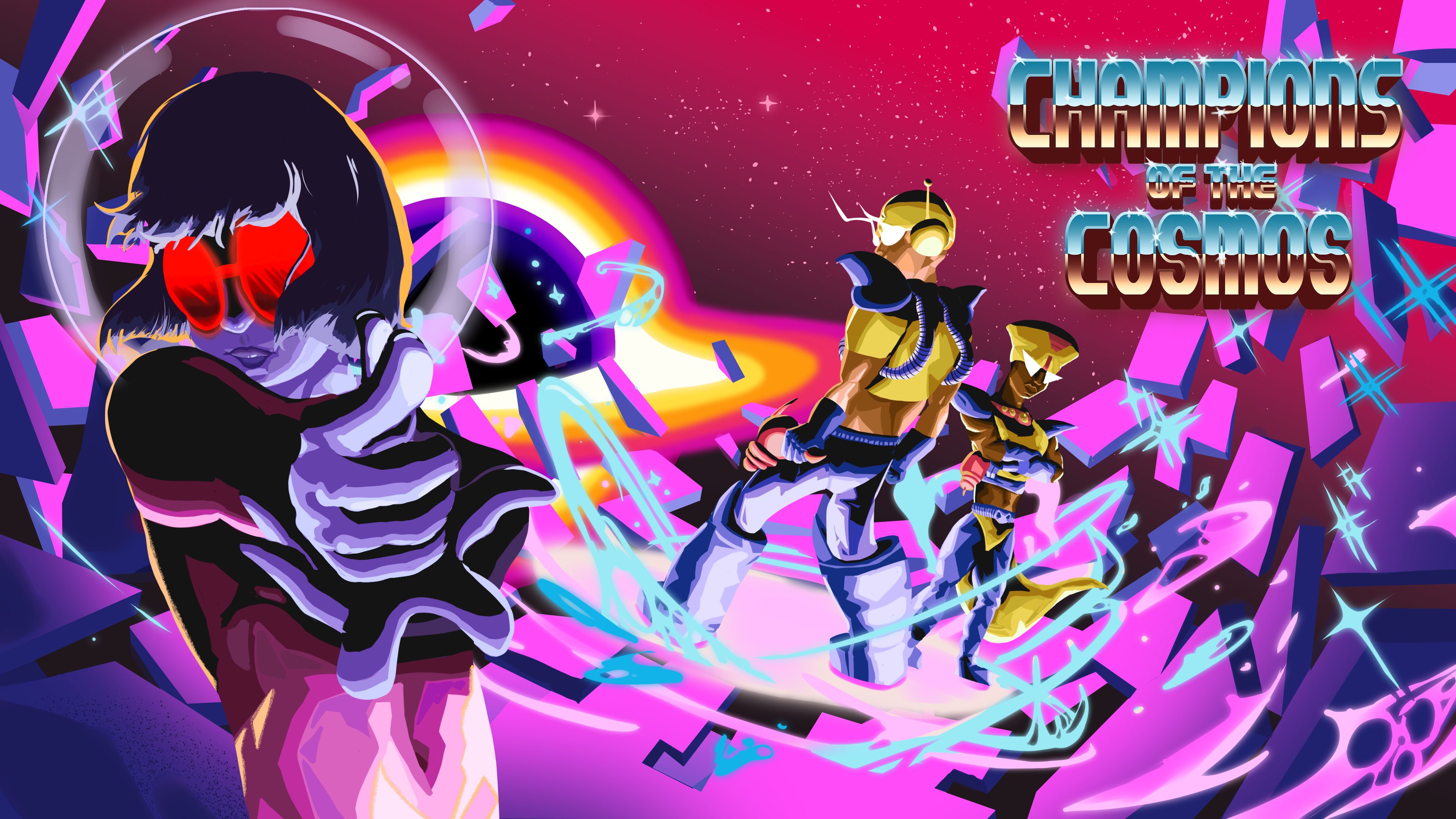
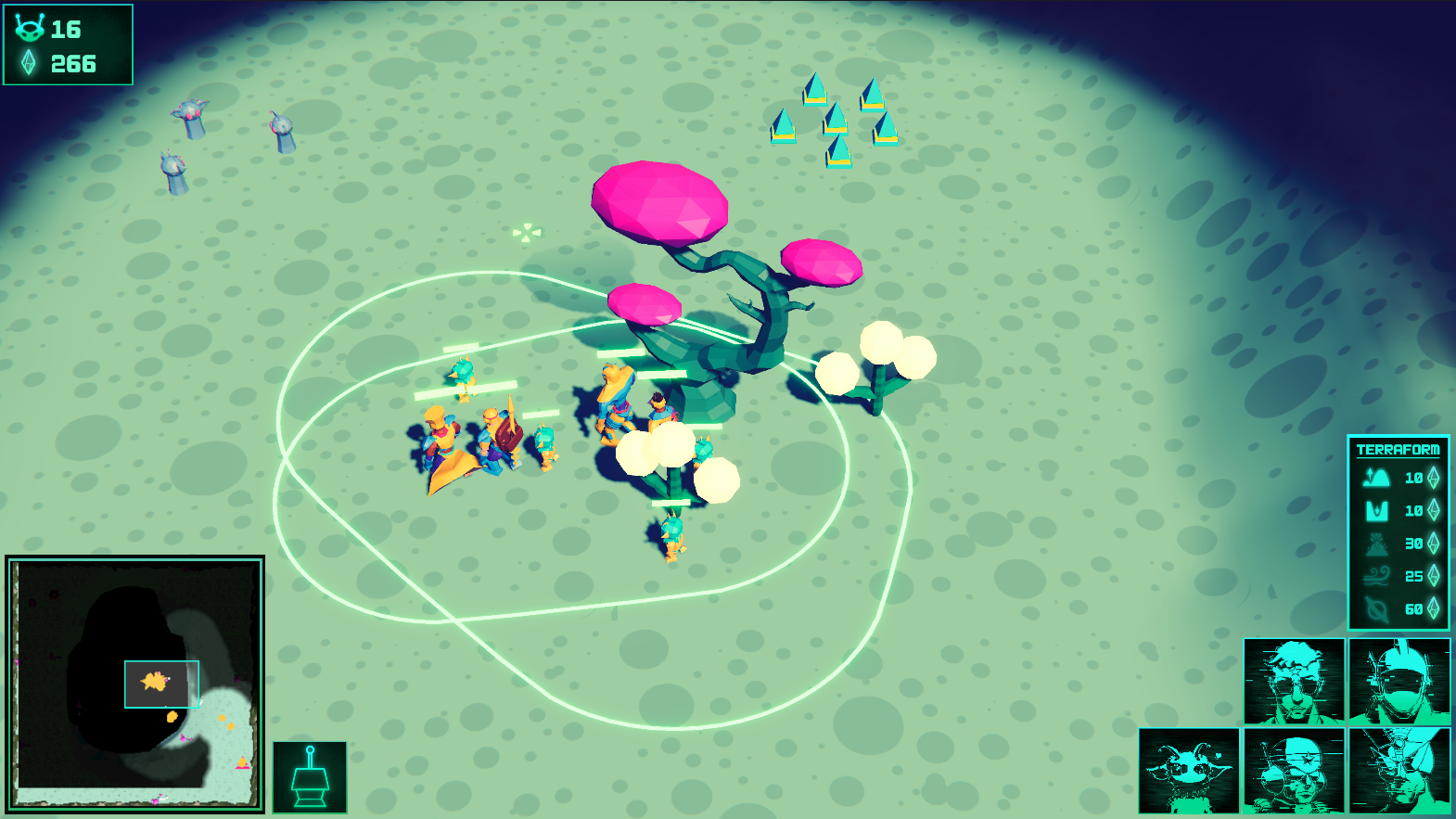
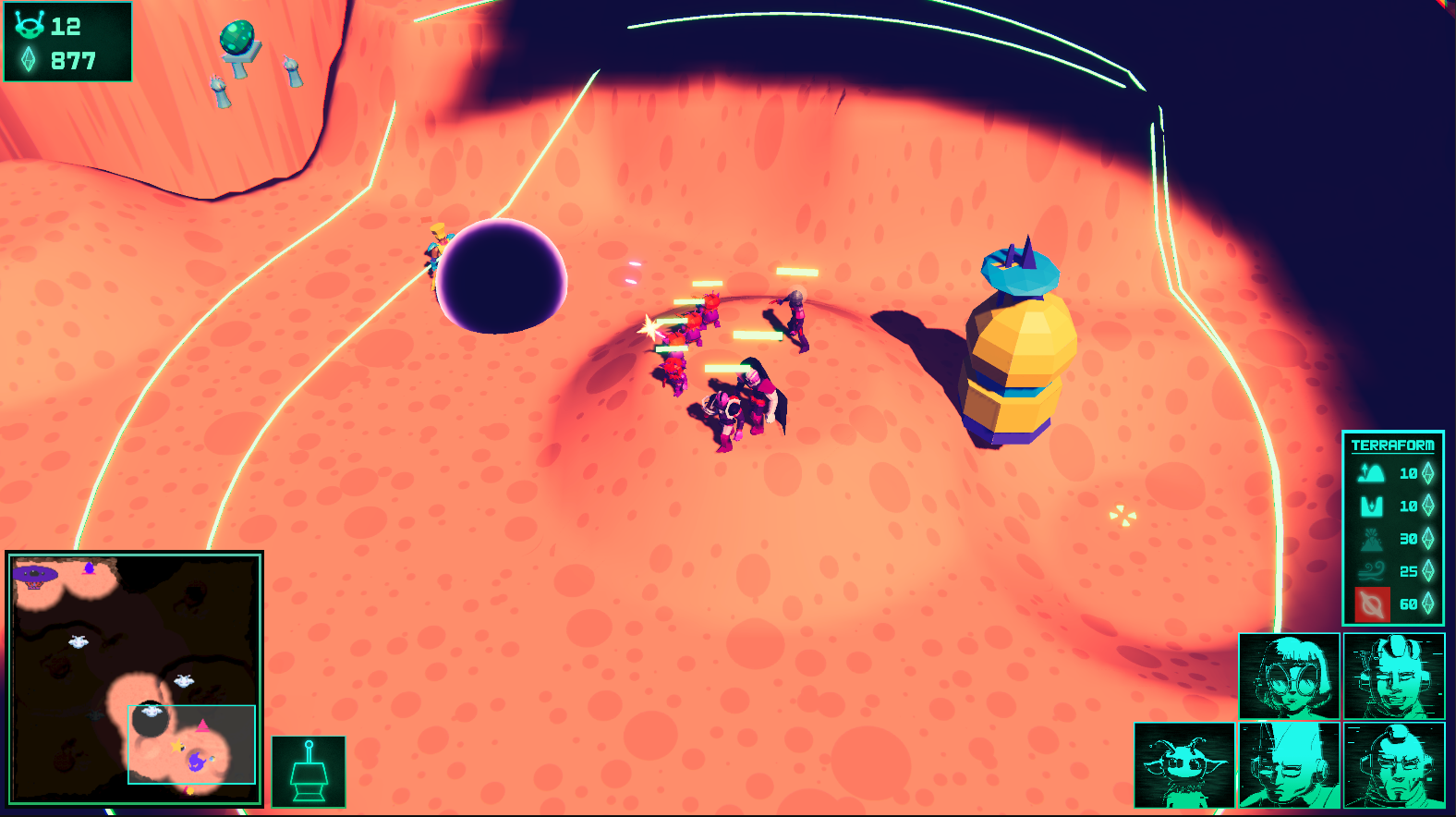
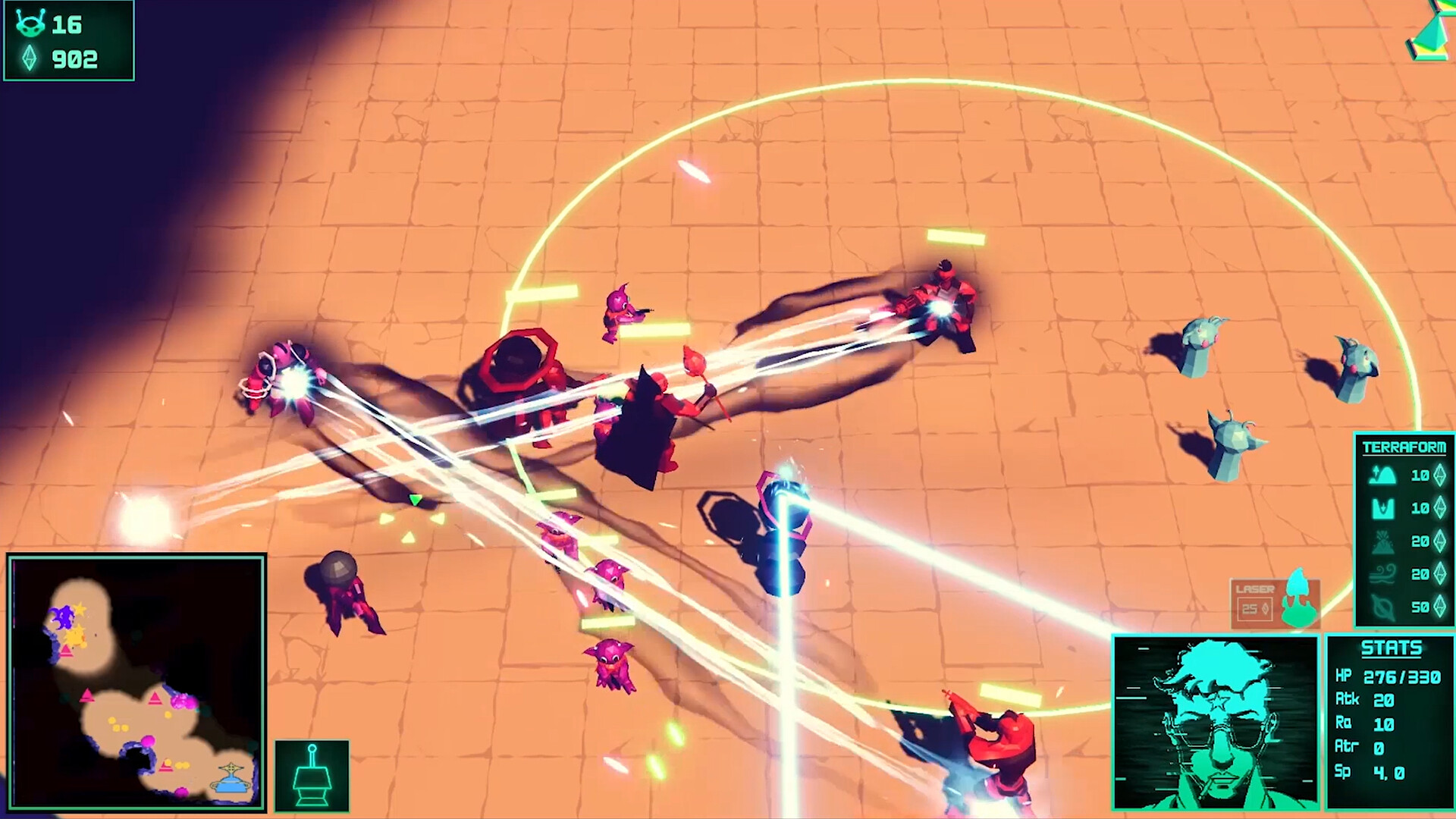
Champions of the Cosmos is a retro sci-fi RTS game with terraforming mechanics for Windows and Mac. It takes place in a fictional world inspired by 80s cartoons and comic books, where players can choose between two campaigns, light and dark and use unique hero abilities in order to achieve victory.
This game was part of the HNU student project booth at the German Dev Days 2025.
Vision Keeper, Game Designer & Writer
The goal for this project was to make an RTS that stood out enough to attract an already existing and very faithful player base and get them interested into a new game in a well established and saturated genre. After analyzing the target audience for the genre RTS, I decided against making too many changes to the RTS-formula, as the core player base seemed satisfied with it. Instead I focused on coming up with a mechanic that wasn’t yet established in the genre but would suit the already existing mechanics well.
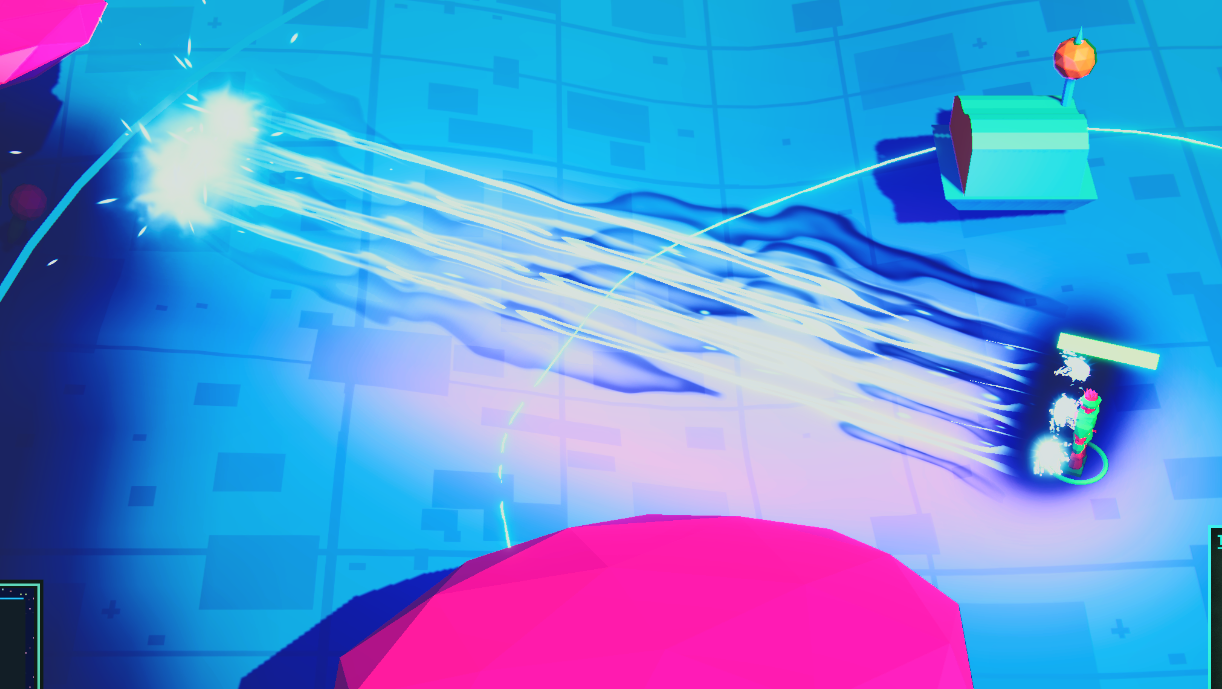
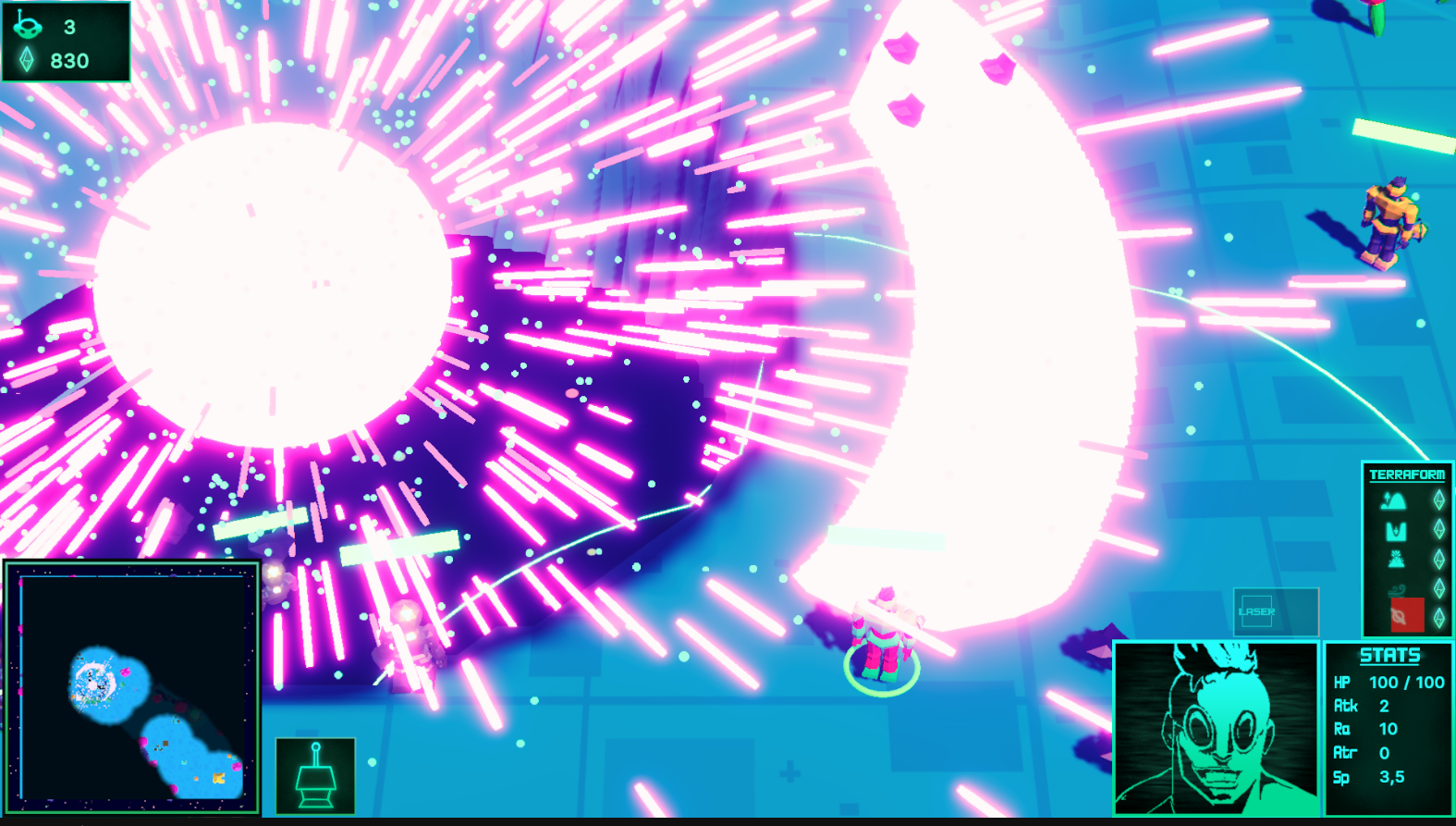
The idea was to create a terraforming mechanic that would let players create their own high ground, cover or obstacles to make strategic decisions. Resources in the game can be used to shape hills, chasms or even black holes, making the futuristic planetary surface as adjustable as clay. While the already existing mechanics such as creating units, farming resources and establishing a proper based still existed, the additional adjustments made the feel dynamic, flashy and fun. I decided to lean into this by adding fun, resource-based abilities to the game, such as big, flashy lasers, traps and even all-consuming black holes.
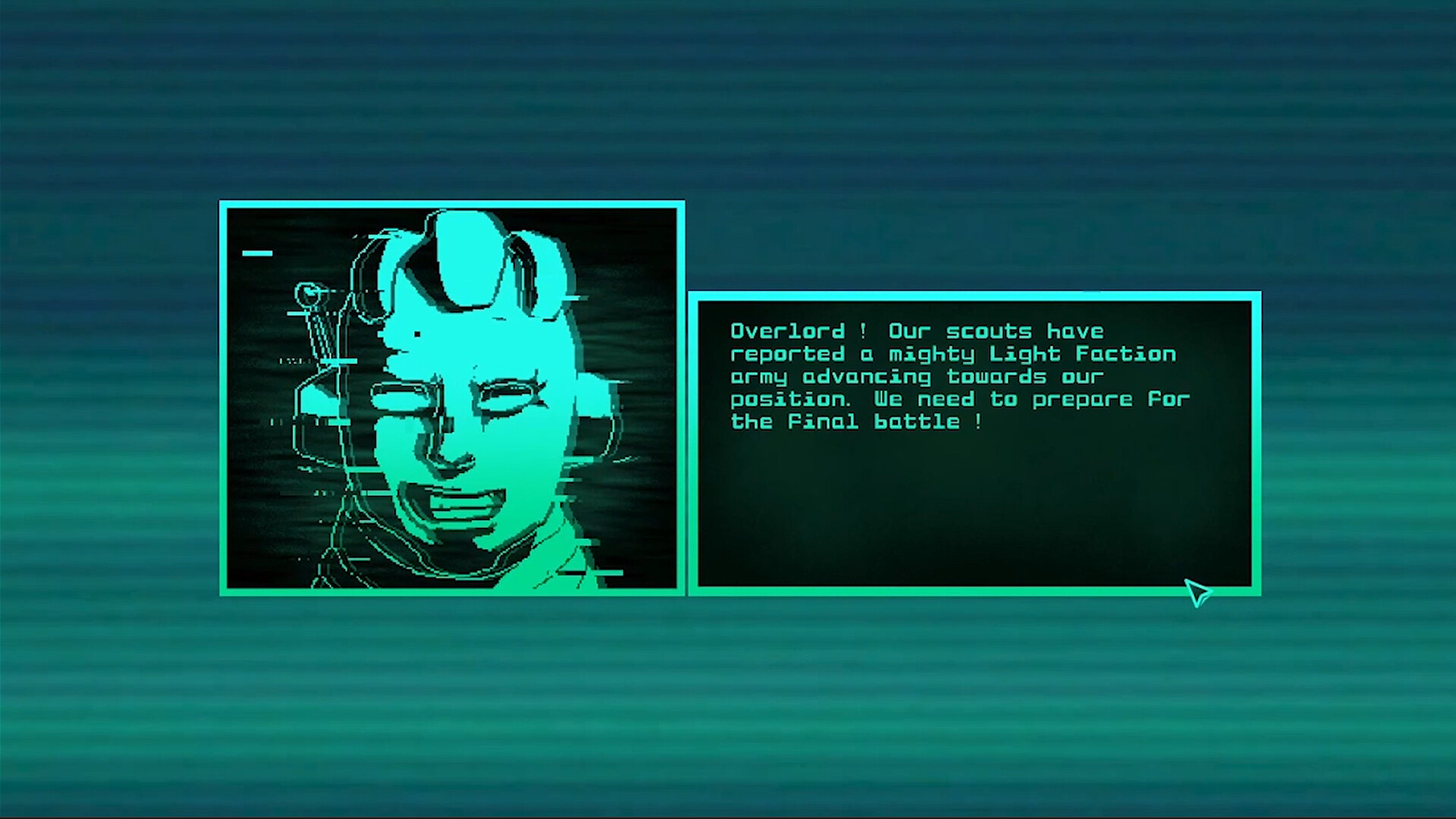
This was paired with a campy, over the top good versus evil sci-fi story inspired by cartoons and comics from the 80s. The characters, dialogues and world became exaggerated, straightforward and fun, with the intention to make you feel like the commander of your own superheroic, world-bending unit.
Part of the assignment was to create a multi-chapter campaign, so we decided to give players the opportunity to play as both the light and dark side accordingly. Each side has different units with different abilities, dialogues and designs, creating much replayability and room to experiment.
Project Manager & Producer
Additionally, I assisted our project manager and producer with different management tasks, as I had previous experience from other projects and he didn’t. I created schedules and deadlines for our team, helped preparing pitch decks and before presentations and gave him pointers whenever he didn’t know how to deal with a tough situation.
I taught him how to use different project management tools, create reasonable and measurable goals for each team member and to keep morale up through positive encouragement or treats. I helped him with readjusting schedules, assisted with difficult talks and motivated him if necessary. Additionally, I was in charge of planning our team’s trip to the German Dev Days, booking hotel rooms, train tickets and organizing decorations and tech we needed at our booth.
While my original goal for this semester was to focus entirely on Game Design, it was fun and challenging to teach and help a less experienced project manager. I helped the group find its pace and made sure the overall project was able to continue, despite challenges.
CRUORA – BLOODY DESCENT (2026)
Genre: First-Person Action RPG
Role: Vision Keeper, Game Designer, VFX & Shader Artist
Project Length: Semester Project
Team Size: 9 People
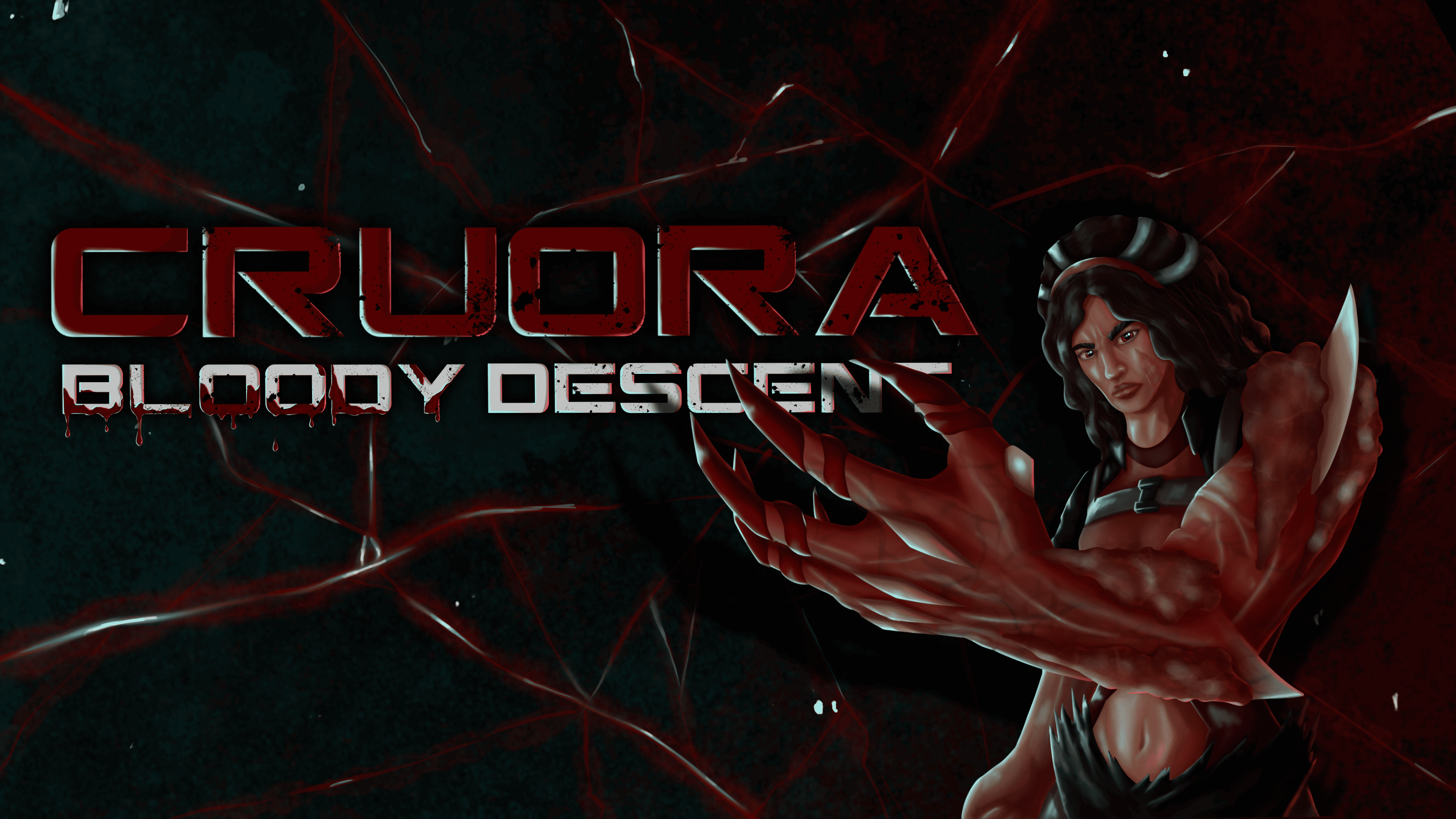
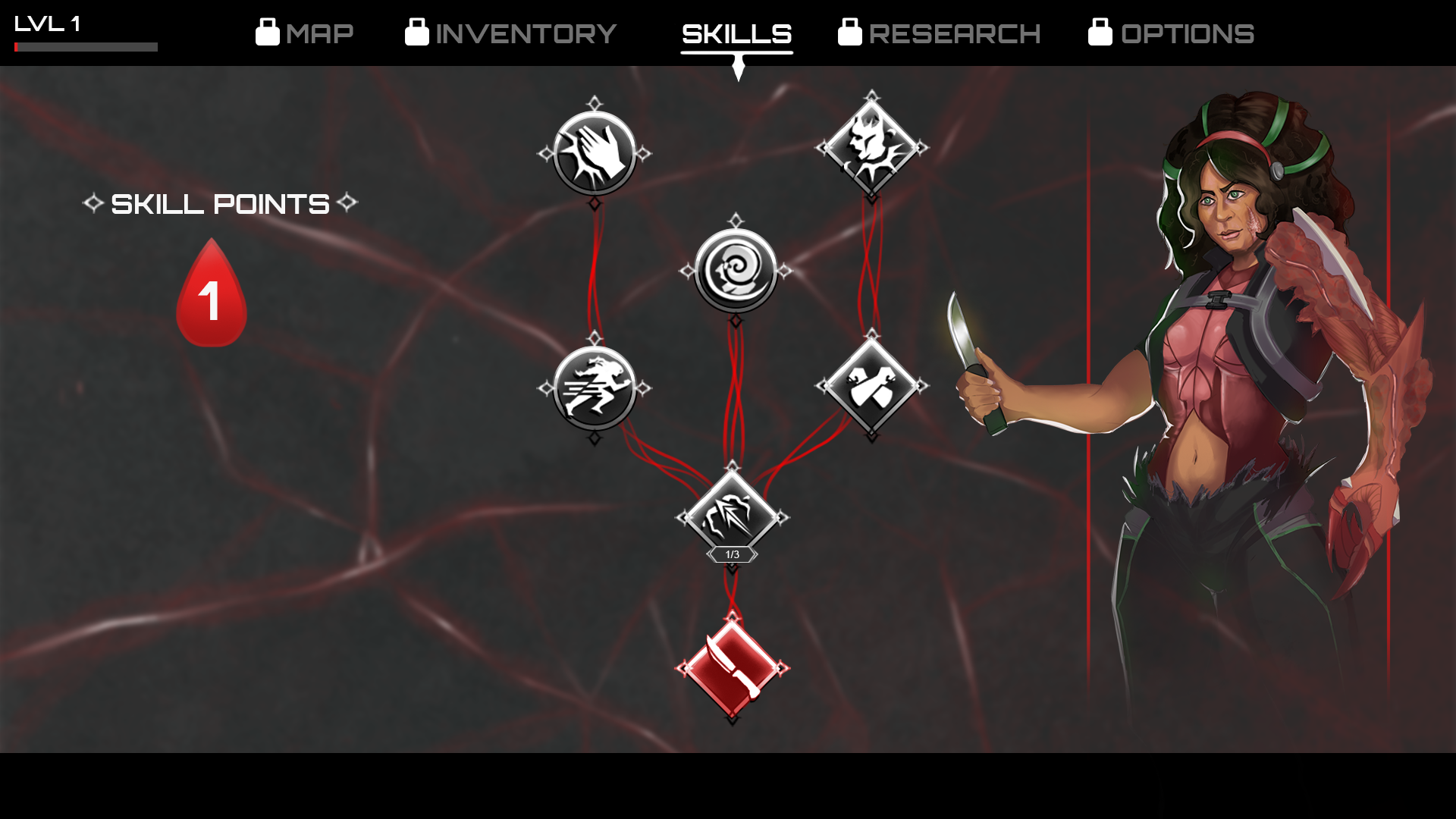
CRUORA – Bloody Descent is a first-person action RPG set in a dystopian sci-fi future, where humanity is on the brink of extinction. In a twisted attempt to save humanity, a dark cult has been kidnapping women, experimenting on them and forcefully taking their children from them. As Cruora manages to escape their twisted shackles, she only has two things on her mind: revenge, and finding her long lost son.
Vision Keeper & Lead Game Designer
The goal for this project was to create an RPG with a strong and impactful direction. I wanted to make a game to vent and take out your frustrations on the enemies, so I knew early on that it was going to be graphic, personal and gritty. The result is a dystopian world where women, only valued for their ability to give birth, are mistreated like cattle. The goal was to make players feel the main character’s pain, while also reflecting on real tragedies, such as misogyny, child kidnapping and radical cults. Since forced assimilation exists even today, I wanted to handle the topic with a certain sensitivity, making sure the game took those topics seriously. The setting is a fictional, near-future dark sci-fi setting to avoid too many similarities with real life events.
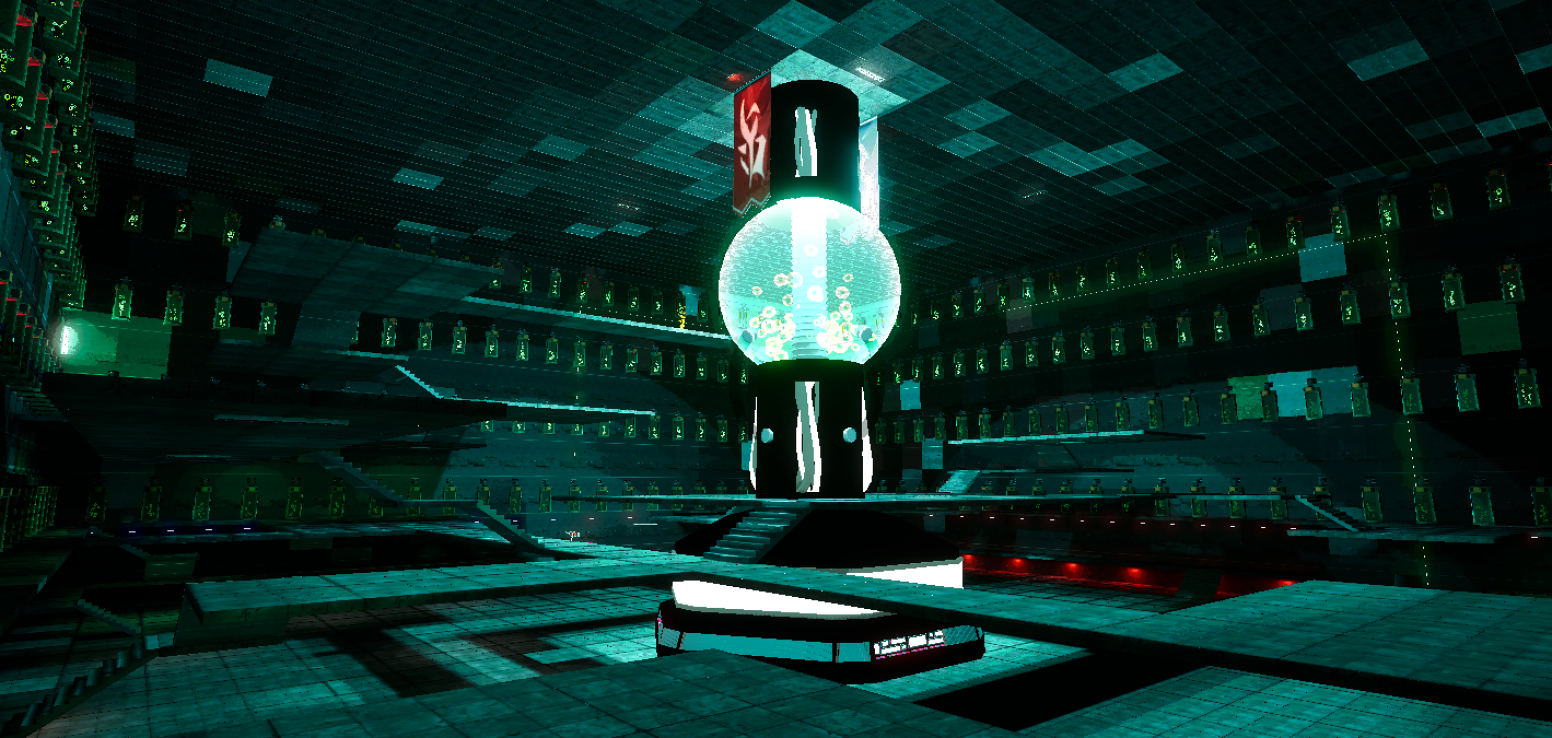
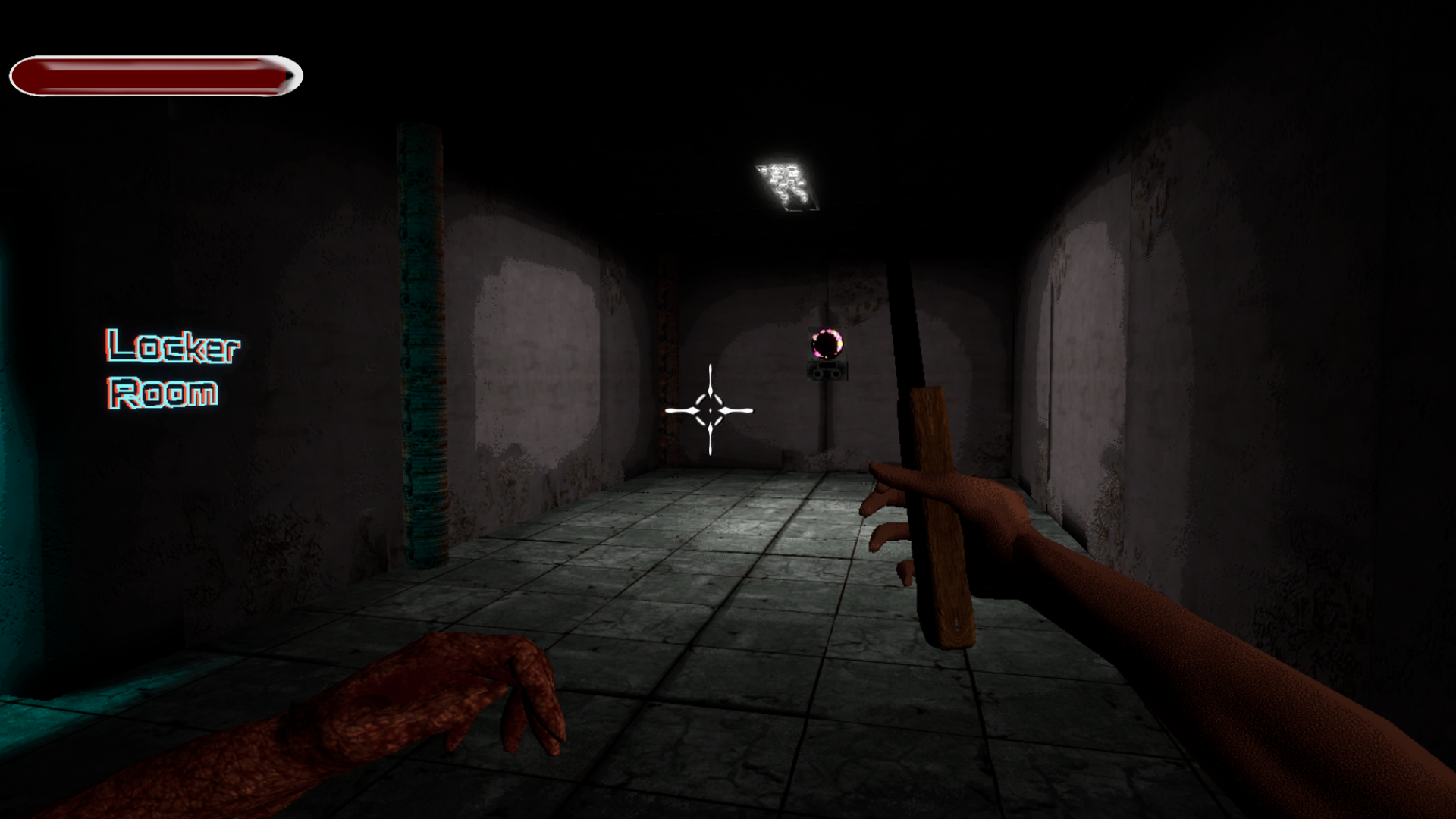
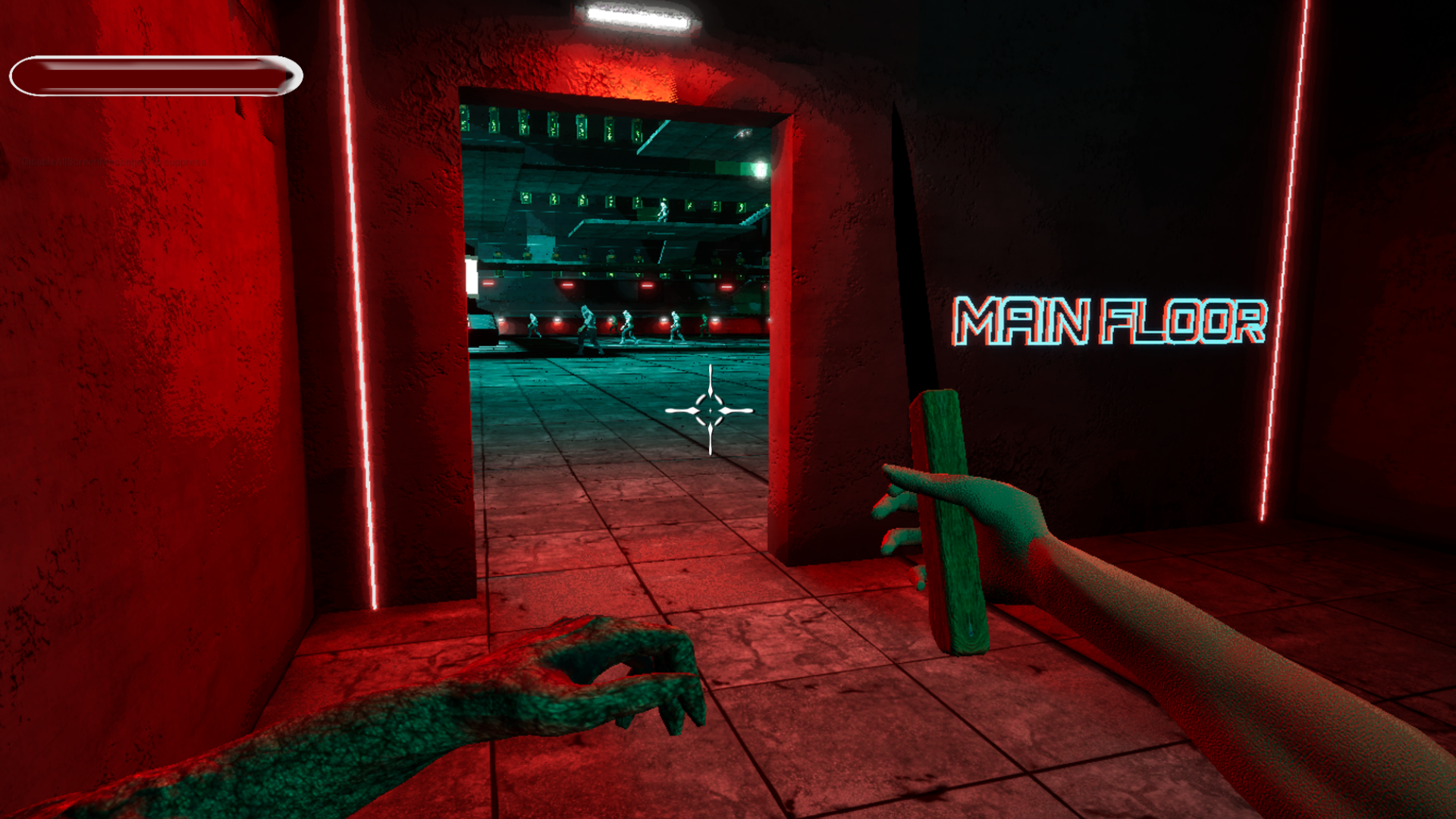
Gameplay-wise, I focused on the level design, story and setting, while another game designer focused on skills and combat. I supervised her and made sure we both worked towards the same goal and that combat and the dungeon’s layout fit together well. I created the dungeon design in Dungeon Scrawl, then added key locations and puzzle logic for progression. I greyboxed the entire dungeon with placeholder assets and readjusted rooms to create an engaging, creepy and claustrophic layout. The final dungeon has three different floors with multiple puzzles and different enemy placements, together with a center hub leading towards the exit. Each individual floor has to be visited to find one of three keys lead to the final boss. To make navigation in the maze-like structure easier, I installed neon lights in different colours, signaling the way.
Additionally, I came up with easily scalable puzzle mechanics, such as buttons and switches to open doors. Since action and combat were the main focus of the game, I kept puzzles simple, just enough to break up the pace every once in a while.
VFX & Shader Artist
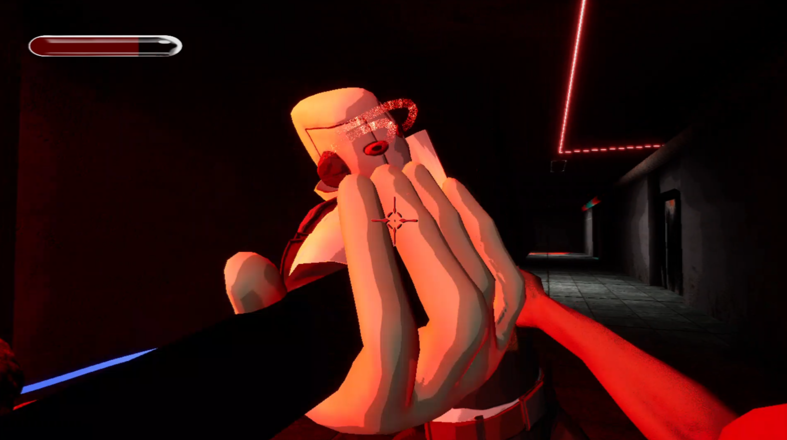
Additionally, I was in charge of the game’s VFX and shaders, using UE5’s Niagara systems and Blueprints. I created the game’s cel shader, placed lights and set the mood and created different effects such as blood splatters, acid bubbles and more. Since red was the colour assigned to our protagonist, I wanted to make the world green, grey and blue to help her stand out.
For effects such as blood, I primarily used the Niagara system while shaders were made from scratch using Blueprints. Being both Vision Keeper and in charge of the level layout and lighting meant creating the atmosphere and feeling of the game was largely in my hands. Building new rooms or effects for the game helped the rest of team to understand the overall vision more clearly.
NUTRIVISE (2025)
Genre: Point-and-Click Educational Card Game for Mobile and Browser
Role: Vision Keeper, Project Manager, Producer
Project Length: Semester Project
Team Size: 8 People
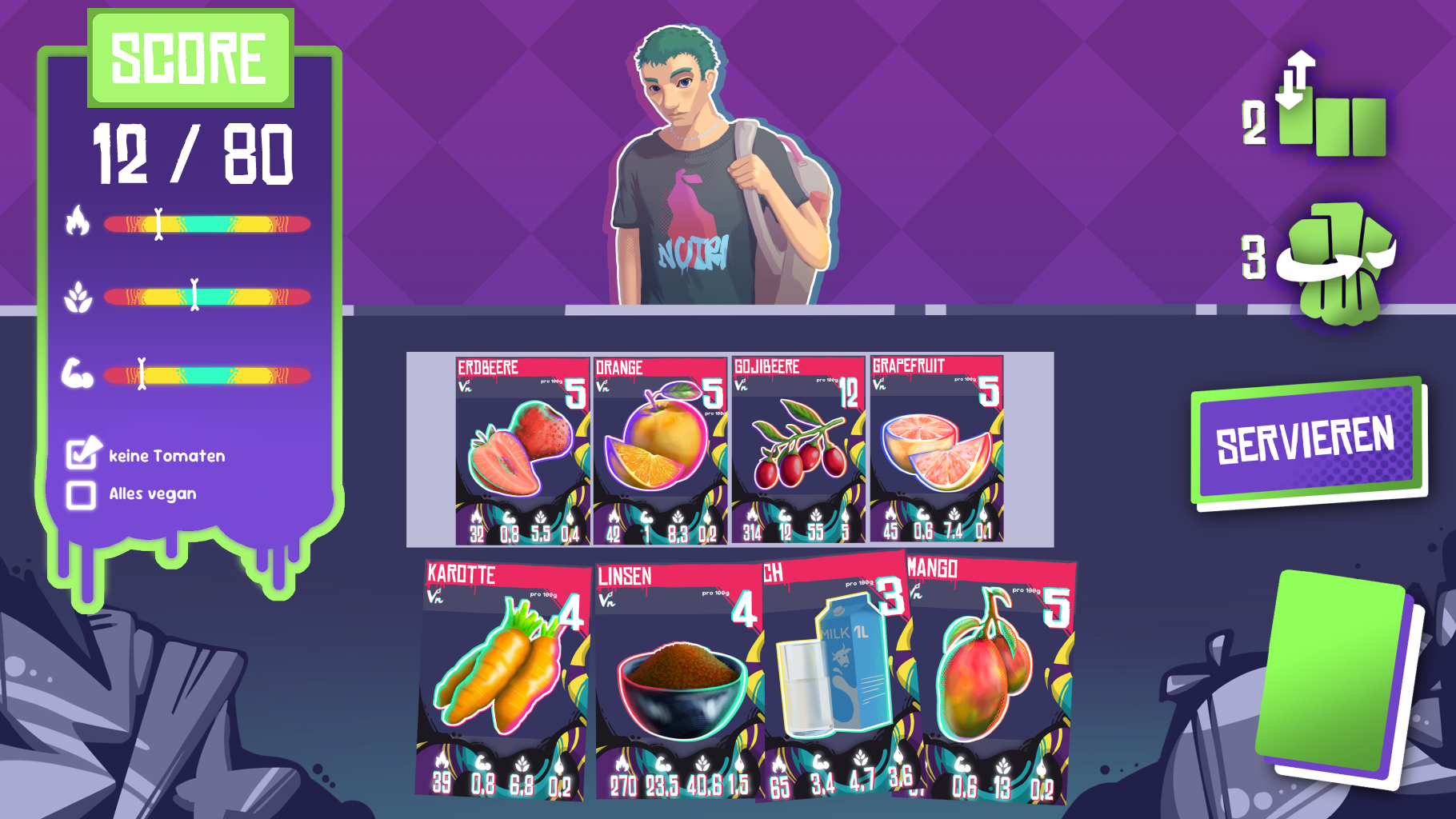
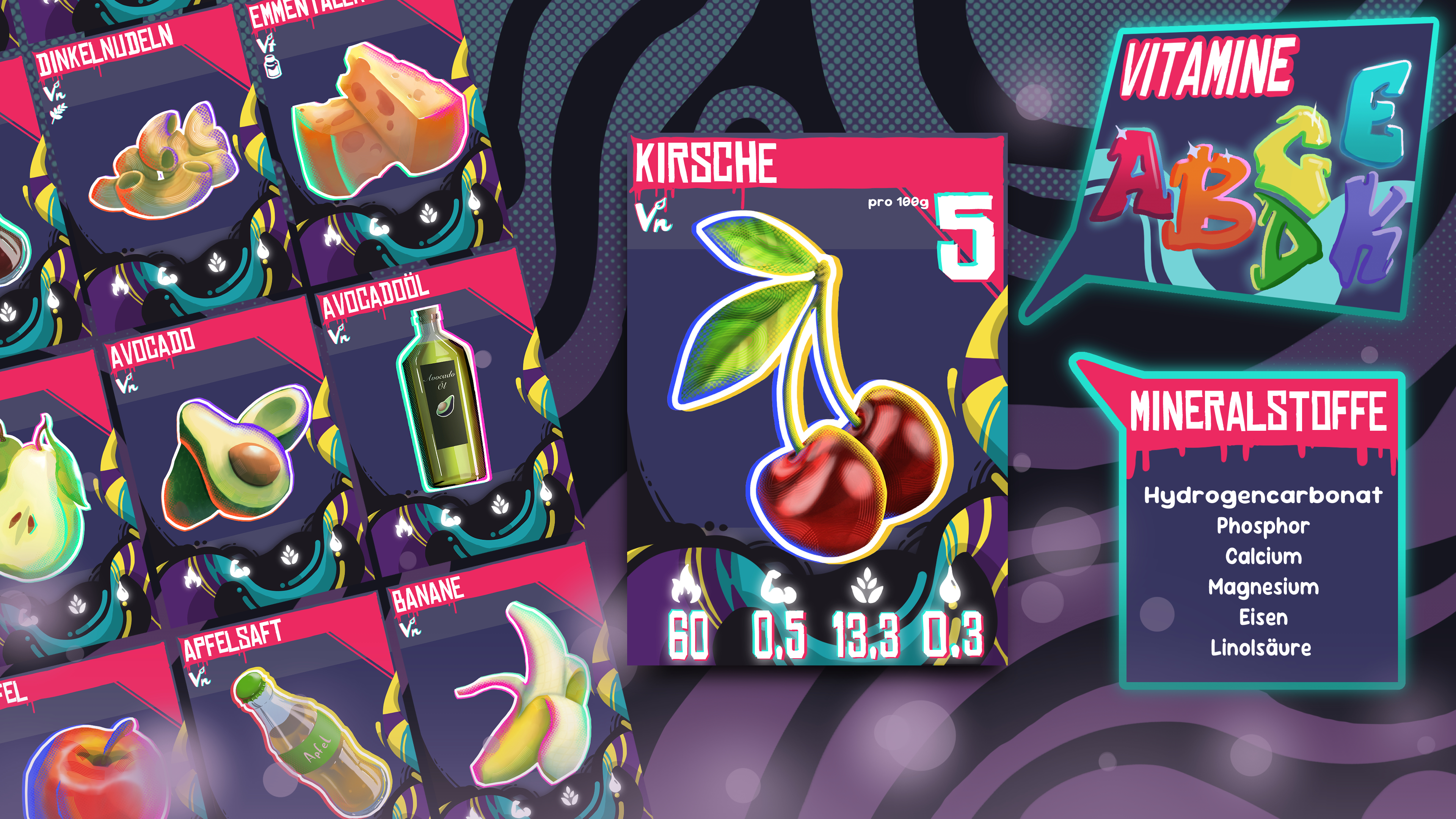
Nutrivise is an educational card game that lets players combine different ingredients in order to create nutritious meals. It was made in cooperation with a 9th grade „nutrition and health“ class and supervised by their teacher.
Vision Keeper
For this game, the goal was to create a fun and easily accessible mobile assistant for students to use during their health class. Since we worked with a real client, a nutrition teacher, the first step was to figure out what she expected from this game. Her wish was to have an easily accessible app that helps children with memorizing the nutritious value of different types of food. The biggest challenge was to fit as much information into the game as possible without sacrificing readability or fun. I came up with the idea of a card game, as it would also be possible to create a physical version of the game to be played with real cards instead of phones or tablets, which seemed perfect for a classroom.
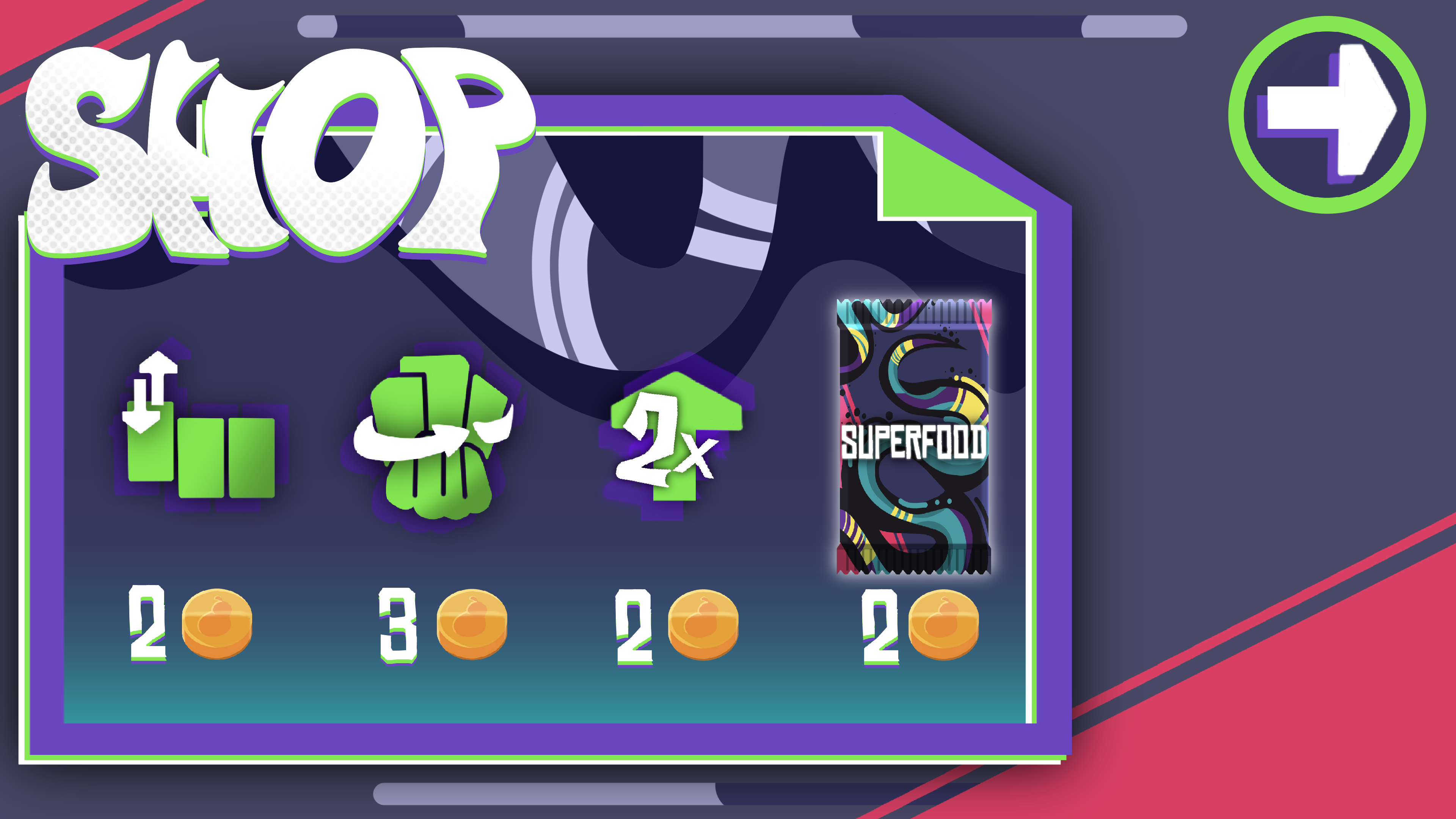
The game ended up becoming a food-based card game, where players combine different food items to create well-balanced meals. In the game, they create meal plans for different customers with preferences, allergies or diets, teaching kids that you can eat healthily no matter what.
Project Manager & Producer
As producer, I was in charge of holding bi-weekly meetings with our client to share our progress, adjust the game to her needs and wishes. The biggest challenge was to communicate our progress in the early stages, as our client was unfamiliar with game development and what it meant. A big part of my job was properly communicating her needs to the team, while also adjusting her expectations for the project in order to protect my team and not set any unreasonable goals. Finding the right vocabulary and the middle ground between what the team wanted the game to be and what the client wanted was my main job. I also prepared pitch decks and held pitches as part of our project requirements and reported to my professors about our progress regularily.
For testing, we decided to schedule testing sessions with the children, as their feedback was invaluable to us. I planned our trip, prepared a questionaire and led everyone, including my team and teachers through the testing session. Overall feedback was positive and our client complimented my methods and handling of the kids as very empathetic and professional.
Additionally, I used different project management tools, set schedules and deadlines and had checkins with my team members multiple times a week. I encouraged and challenged them according to their individual needs, made sure they fulfilled their tasks in time and felt rewarded for good work. I organized team events to celebrate big milestones and prepared questionaires for anonymous feedback in order to improve my own methods. It was nice to hear that their feedback was entirely positive and that the team said they had never been in a group with a more positive environment before.

